
🌿 Growing Ideas Together: GREENIN ECR Workshop at the University of Surrey
“As one of the organisers of this workshop, I was really pleased to see such active discussion and engagement from ECRs, academics and practitioners. The workshop created a friendly space to share career experiences, exchange ideas on indoor greening, and start new conversations for future collaboration.”
— Dr Hao Sun, GREENIN ECR Network Fellow, University of Surrey
What does your research personality look like as an indoor plant? A resilient snake plant, a flexible pothos, a bold monstera, or perhaps a careful fern?
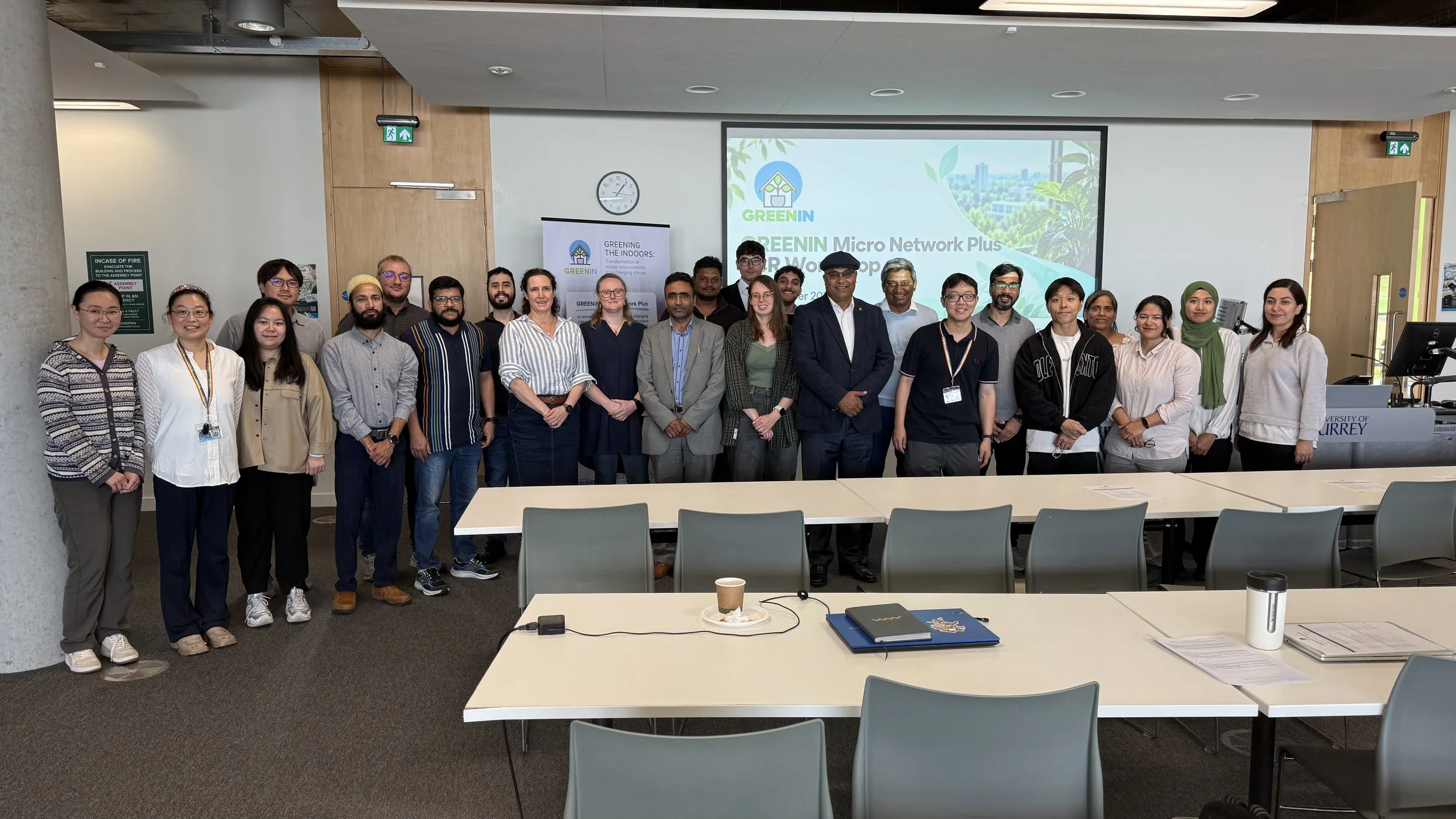
This was one of the questions discussed at the GREENIN Micro Network Plus Early Career Researcher (ECR) Workshop, held at the University of Surrey on 14 September 2026. The event brought together around 30 participants, including early career researchers, academics, practitioners and GREENIN network members, for a day of career reflection, research exchange, creative discussion and future collaboration.
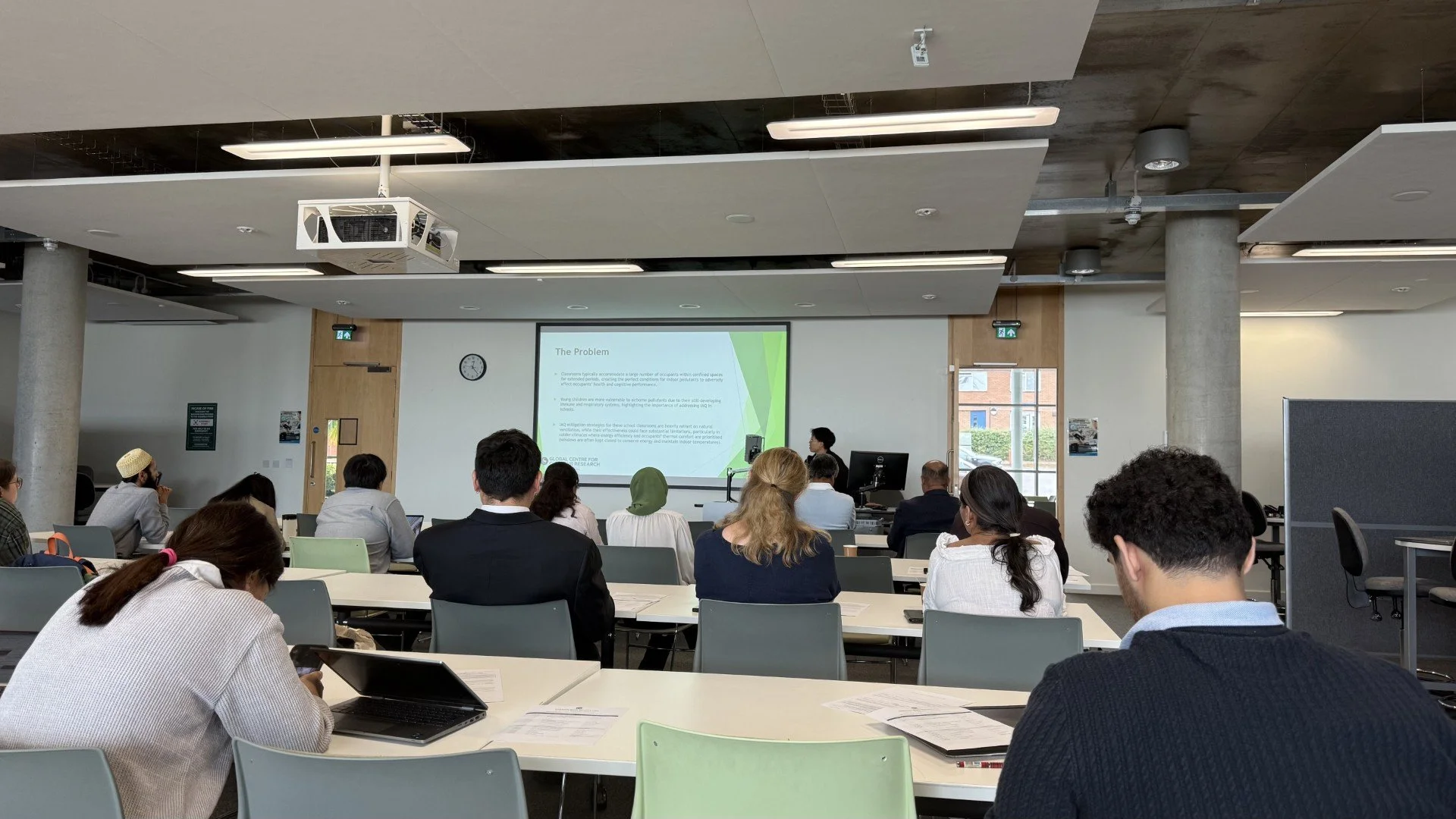
Organised by Dr Hao Sun, GREENIN ECR Network Fellow at the Global Centre for Clean Air Research (GCARE), the workshop was designed to create a friendly and interactive space for ECRs working across indoor greening, indoor environmental quality, health and wellbeing, building performance and related interdisciplinary areas.
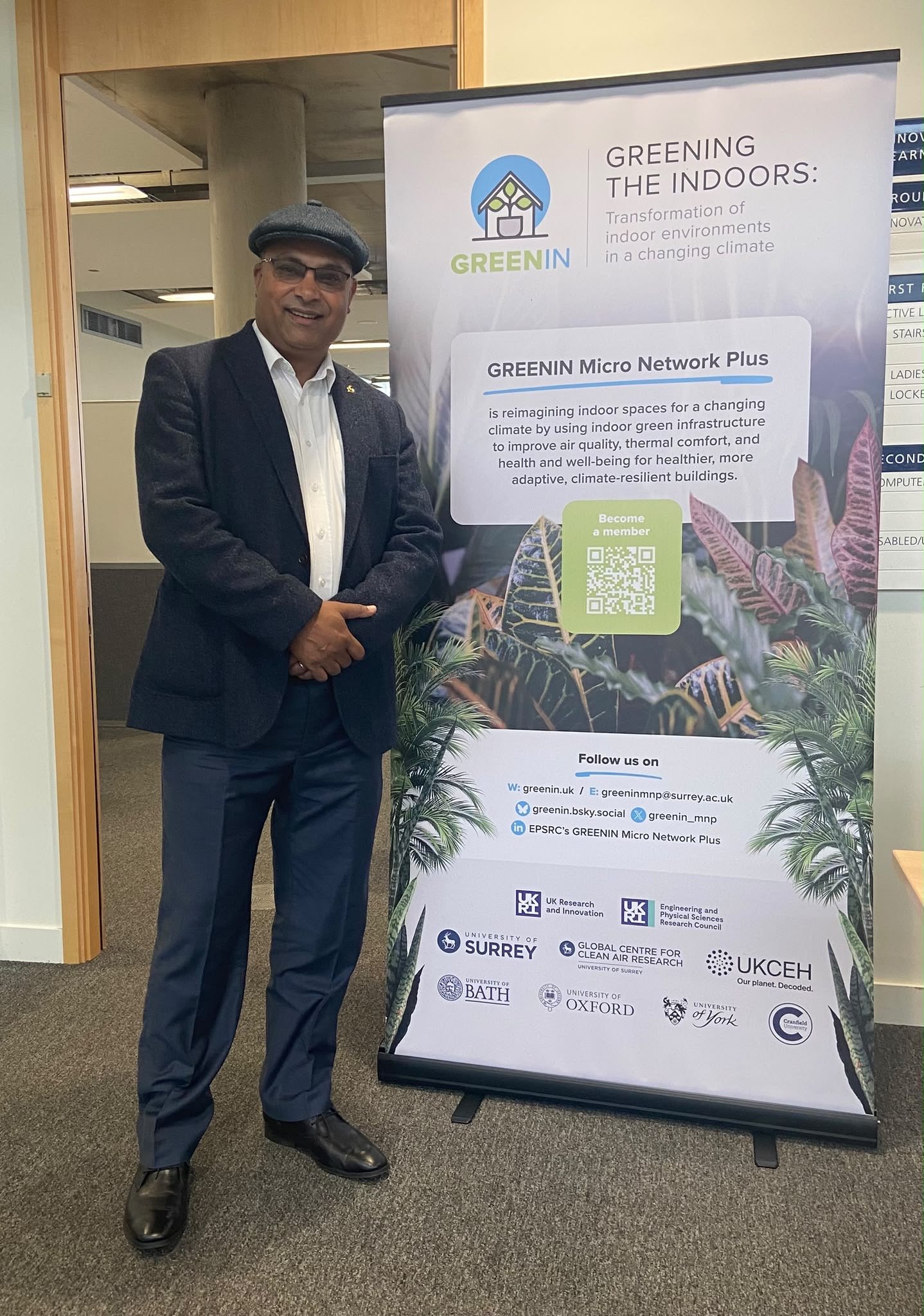
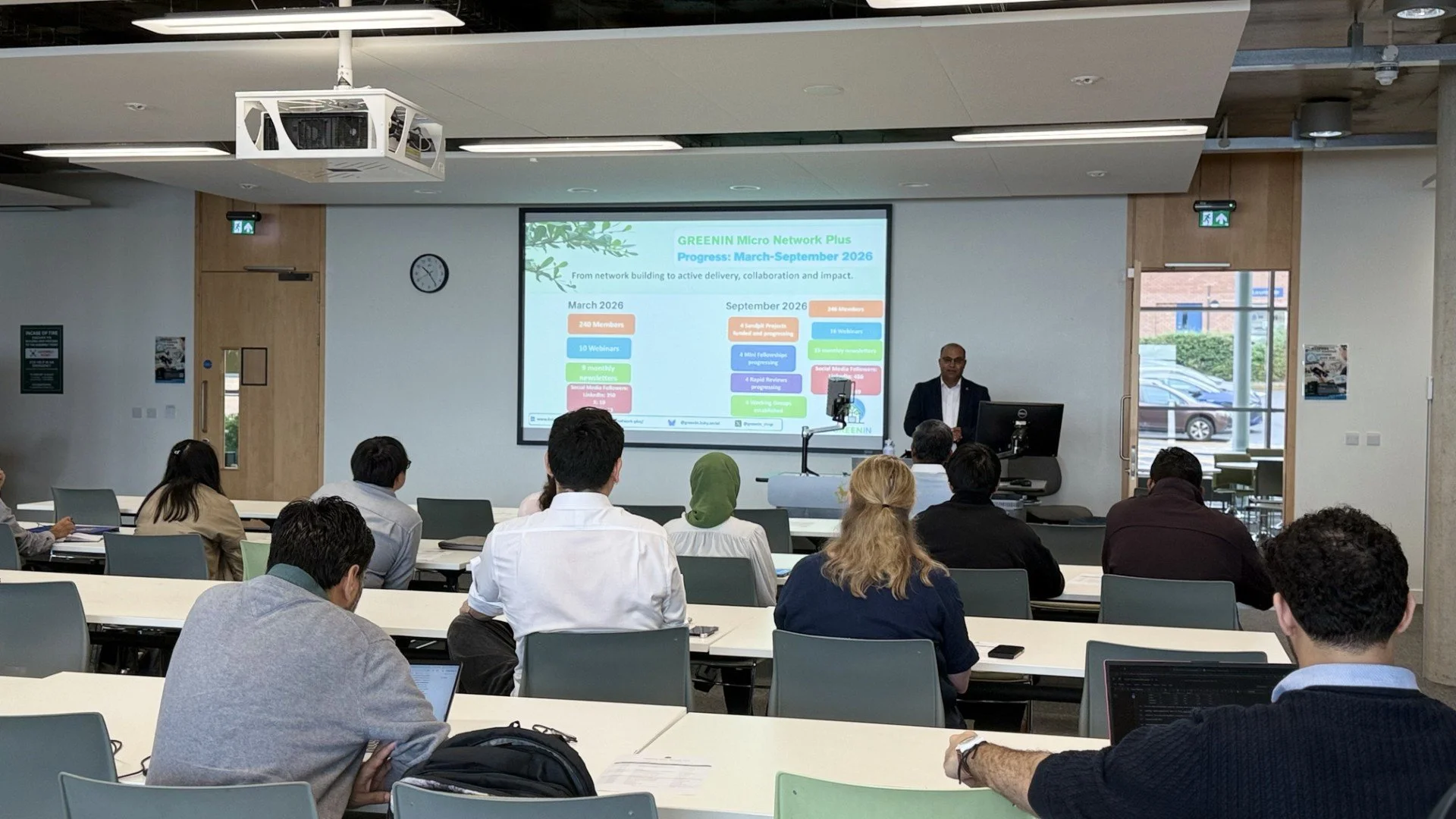
The day began with Professor Prashant Kumar introducing the wider vision of GREENIN Micro Network Plus. His opening remarks set the scene for why indoor greening matters: not simply as a design feature, but as part of a wider conversation about healthier indoor environments, climate resilience, wellbeing and the future of sustainable buildings.
A key aim of the workshop was to support ECRs not only as researchers, but also as people developing their own academic pathways. The morning career session brought together speakers at different stages of their academic journeys, including Dr Vijay Kanawade, Dr John Calautit and Dr Akash Biswal. Their talks offered honest reflections on building a research profile, developing collaborations, managing challenges, and identifying future opportunities. Rather than presenting a single “correct” career route, the session highlighted that academic development can take many different paths.
The panel discussion continued this theme of openness and exchange. Chaired by Dr Hao Sun, the panel included Dr Elisa Valentim Goulart, Dr Murtaza Mohammadi, Dr Akash Biswal, Dr Anubhav Dwivedi and Dr John Calautit. The discussion moved across research, practice and implementation, exploring questions such as what indoor greening can realistically contribute to indoor environmental quality and wellbeing, where the evidence remains limited, and how researchers, practitioners and building users can work together more effectively.
The workshop also included lighter and more creative activities. In the Indoor Greening Photo Challenge, chaired by Wickson Cheung, participants uploaded images related to indoor greening — from real-life examples to creative or AI-generated ideas. The activity encouraged participants to look at indoor greening in a more playful way, while still raising useful questions about design, feasibility, maintenance and user experience.
Research exchange remained a central part of the day. Short indoor greening research presentations from Wickson Cheung, Jorge Parejas and Dr Elisa Valentim Goulart introduced current ideas, emerging projects and different perspectives on how indoor greening can be studied and applied in real spaces.
After lunch, the atmosphere became more interactive again with the “What’s Your Research Plant Personality?” activity, chaired by Wickson Cheung. Participants discussed which indoor plant best represented their research style and what qualities are most important for doing good research. The conversation moved naturally from humour to reflection, touching on qualities such as curiosity, resilience, adaptability, collaboration, creativity, focus and attention to detail.
The afternoon then turned towards future GREENIN activities. Dr Akash Biswal introduced the indoor greening database and questionnaire session, inviting participants to think about what kinds of information should be captured in a future indoor greening database. Group discussions explored plant types, indoor settings, indoor environmental quality outcomes, wellbeing benefits, maintenance needs, risks, evidence gaps and practical challenges. Participants also considered which indoor spaces should be prioritised for future research, including classrooms, offices, homes, healthcare spaces and community buildings.
By combining discussion with questionnaire responses, the session collected structured input that will help shape future GREENIN work. The outputs from the workshop will support the development of future indoor greening research activities and contribute to thinking around a practical indoor greening database for researchers, practitioners and building users.
The workshop concluded with reflections and closing remarks from Professor Prashant Kumar and Dr Hao Sun. By the end of the day, there was a clear sense that the GREENIN ECR community has plenty to build on. The discussions at Surrey will feed into the next stage of GREENIN activities, particularly the indoor greening database work, and we hope the connections made during the workshop will continue through future projects, conversations and collaborations.
“Supporting Early Career Researchers is central to GREENIN’s ambition to advance knowledge and practical solutions for healthier indoor environments. It was encouraging to see participants share their experiences, question the evidence and contribute ideas for our future indoor greening database. I thank Hao and everyone involved for creating an opportunity to connect across disciplines, and I look forward to seeing these conversations develop into future research collaborations.”
— Professor Prashant Kumar, GREENIN Project Lead, University of Surrey