

Rapid reviews

Rapid reviews
The GREENIN Micro-Network Plus will fund four Rapid Reviews. These reviews will synthesise existing evidence across disciplines to identify key knowledge gaps, highlight areas requiring further investigation, and provide actionable research recommendations. Each review will aim for publication in an established peer-reviewed journal, helping to advance academic understanding and inform policy and practice. The reviews will also serve as a foundation for future collaborative work within the GREENIN network.
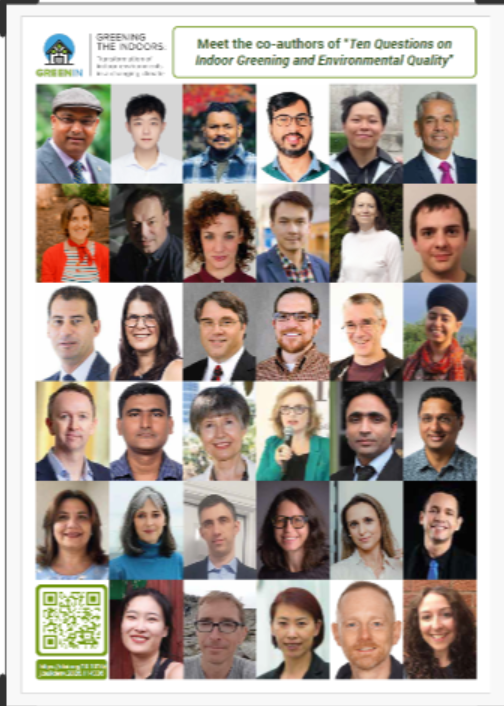
Ten questions on indoor greening and environmental quality
“To understand the true impact of indoor plants, researchers created a ten-question framework. This framework examined technical performance, microbiology, health effects, social and economic factors, and the role of place. This approach helped experts look at indoor greening from many angles instead of focusing on only one benefit. The team also compared 26 different indoor greening systems. These included simple potted houseplants, indoor living walls, and hydroponic towers. Living walls cover vertical surfaces with plants. Hydroponic towers grow plants without soil by using nutrient-rich water. This comparison gave building designers and managers practical guidance about what works best and where more research is still needed.” Earth.com
Download the paper here.

Led by Professor Nicola Carslaw
University of York
Rapid Review 1 :Impact of plants on Indoor Environmental Quality: Underlying mechanism
This review will focus on the mechanisms by which plants affect indoor environmental quality (IEQ), namely indoor air pollutants, mould, humidity and temperature. We will explore whether there are win:win scenarios where e.g. indoor greening can improve indoor air quality and also prevent mould. Or does improving one aspect of IEQ with indoor greening often lead to a deterioration in one of the other parameters? We will also explore how occupant activities in buildings, and interactions with the outdoor environment (e.g. window opening), influence the impact of indoor greening on IEQ. The overarching aim is to understand whether indoor plants can provide the air-purifying benefits claimed by the market, and if so, what scale is required to realise these benefits (and is this practical)?

Led by Professor Prashant Kumar
University of Surrey
Rapid Review 2 : Monitoring and modelling of indoor environmental quality to guide indoor greening applications
Indoor green infrastructures (iGI) can improve indoor environmental quality (IEQ), but inconsistent quantification methods undermine confidence in reported benefits and limit evidence-based design. This review synthesises monitoring and modelling methods to assess iGI impacts on IEQ, including outdoor-indoor interactions and climate change effects.

Led by Professor Katherine Denby
University of York
Rapid Review 3: Strategies for Optimal Indoor Greening
This rapid review synthesises information and evidence on the different types of indoor greening that are being used, how the design and implementation of indoor greening (e.g. plant species, lighting, spatial layout) can optimise benefits on IEQ, what the challenges and barriers to indoor greening performance with respect to IEQ and key research gaps in this area - what do we need to know or understand to improve the efficiency of IEQ through indoor greening.

Rapid Review 4 : Health and Wellbeing
Led by Prof Sukumar Natarajan
University of Bath
This Rapid Review examines the health and wellbeing impacts of indoor greening, alongside its potential unintended consequences under a changing climate. It reviews current evidence on how indoor greening influences occupants' wellbeing, indoor hygrothermal conditions, building ecology, and overall indoor environmental quality, helping to inform future research and evidence-based practice.
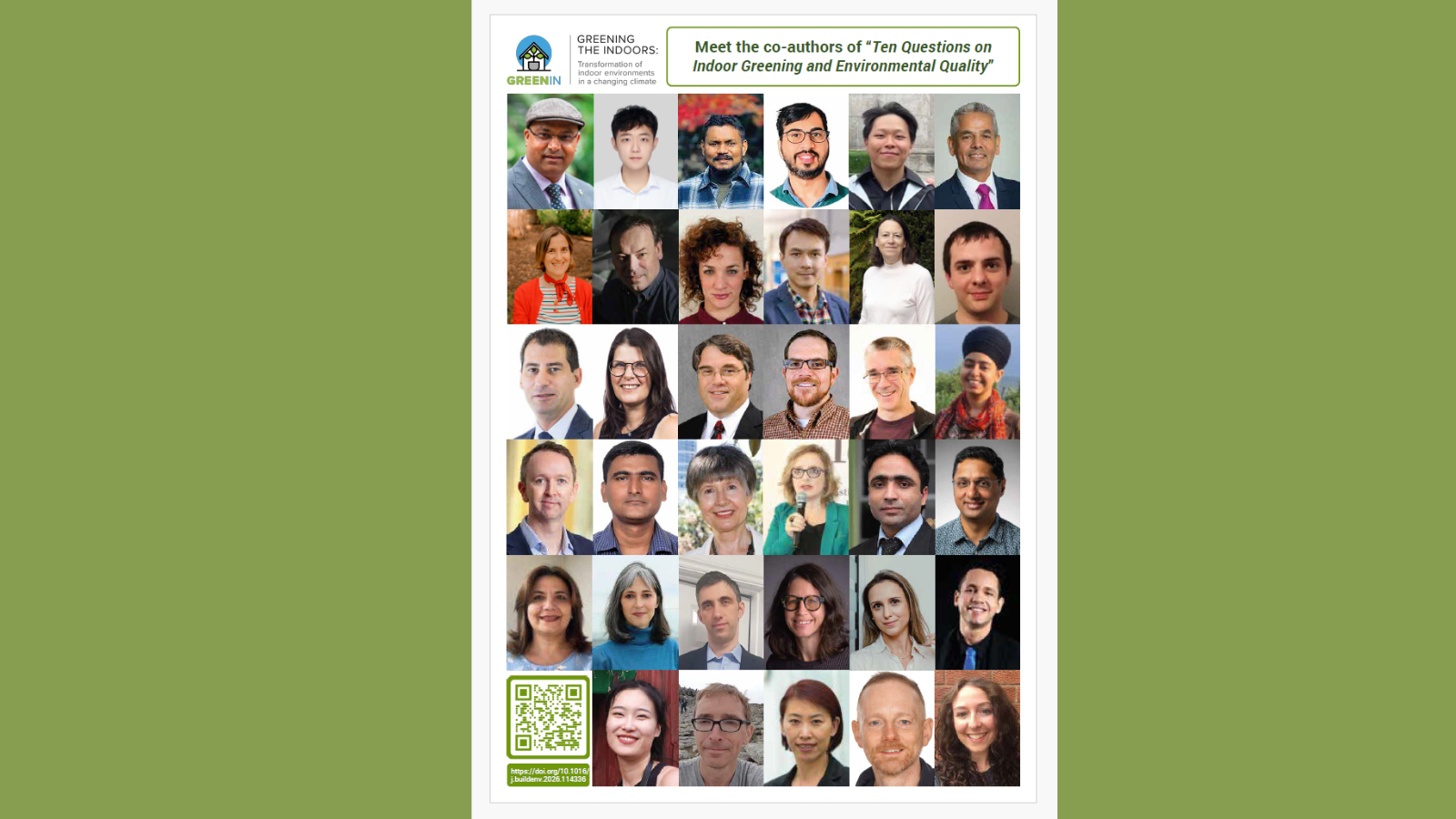
Ten questions on indoor greening and environmental quality
“To understand the true impact of indoor plants, researchers created a ten-question framework.
This framework examined technical performance, microbiology, health effects, social and economic factors, and the role of place. This approach helped experts look at indoor greening from many angles instead of focusing on only one benefit.
The team also compared 26 different indoor greening systems. These included simple potted houseplants, indoor living walls, and hydroponic towers.
Living walls cover vertical surfaces with plants. Hydroponic towers grow plants without soil by using nutrient-rich water.
This comparison gave building designers and managers practical guidance about what works best and where more research is still needed.” Earth.com
Download the paper here.
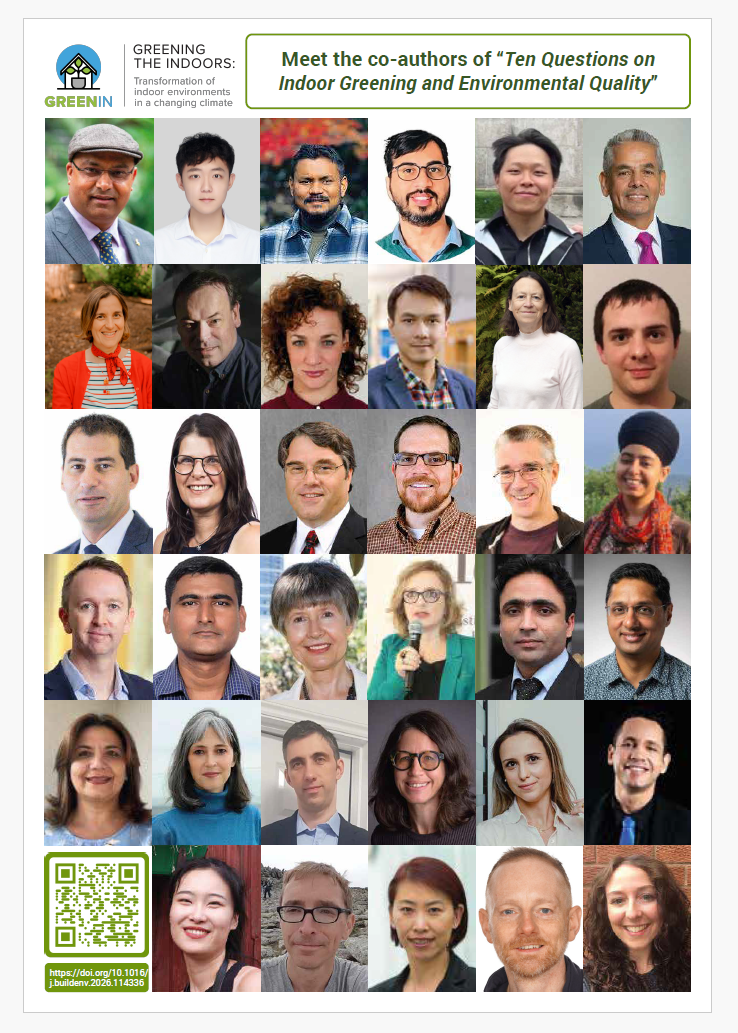

Rapid Review 1 - Impact of plants on Indoor Environmental Quality: Underlying mechanisms
Further information will be shared here. Stay tuned.

Rapid Review 2 - Monitoring and modelling of indoor environmental quality to guide indoor greening applications
Indoor green infrastructures (iGI) can improve indoor environmental quality (IEQ), but inconsistent quantification methods undermine confidence in reported benefits and limit evidence-based design. This review synthesises monitoring and modelling methods to assess iGI impacts on IEQ, including outdoor-indoor interactions and climate change effects.
More information and relevant links will be shared in due course.

Rapid Review 3 - Optimisation and Strategies for Indoor Greenin
Exploring indoor greening options, technologies, plants and optimal design and implementation of indoor green spaces to maximise indoor environmental quality (IEQ) benefits.
Further information will be shared in due course.